How Should You Maintain a Ceramic-Coated Vehicle in Baltimore?
Investing in professional ceramic coating in Baltimore MD provides incredible gloss and paint protection, but maintaining that slick finish requires proper care against local climate challenges. While nano-ceramic coatings create a hard hydrophobic barrier over your vehicle’s clear coat, routine washing and periodic decontamination are essential to prevent microscopic contamination from clogging the surface. By following a structured maintenance routine adapted to regional weather, you preserve your coating’s self-cleaning abilities and ensure your vehicle stays showroom-ready for years.
How Often Should You Wash a Ceramic-Coated Car in Maryland?
You should hand wash a ceramic-coated car every two weeks to prevent urban road film, industrial fallout, and environmental grime from bonding to the surface. Washing on a bi-weekly schedule keeps the hydrophobic pores clean so water and dirt continue to slide off effortlessly.
During Maryland winters, vehicles travelling along Interstate 95 or the Baltimore Beltway (I-695) encounter heavy road salt and liquid magnesium chloride brine. In these colder months, washing your vehicle weekly or rinsing lower body panels every few days prevents corrosive mineral deposits from baking onto the finish.
During summer, humid conditions along the Patapsco River and around the Inner Harbor cause airborne dust, tree sap, and insect splatter to adhere rapidly to exterior surfaces. Washing regularly removes these acidic contaminants before sunlight bakes them into the protective clear layer.
- Bi-Weekly Standard Maintenance: Wash every 14 days using a dedicated two-bucket method to clear routine road grime and airborne dust.
- Winter Weather Response: Wash weekly during active snow months to eliminate corrosive road salt and liquid chemical deicers.
- Immediate Removal Tasks: Spot-clean bird droppings, squashed bugs, and sticky tree sap within 24 hours to avoid surface etching.
What Is the Best Method for Washing a Ceramic-Coated Car?
The best method for washing a ceramic-coated vehicle is the two-bucket hand wash technique paired with a high-pressure rinse and dedicated microfiber materials. This method minimizes physical contact friction, preventing swirl marks while safely lifting bonded surface dirt.
Using proper technique protects both the paint finish and the underlying nano-structure of the ceramic layer.
Step 1: Pre-Wash and High-Pressure Rinse
Always start by rinsing your vehicle thoroughly with clean water from top to bottom using a pressure washer or hose nozzle. This initial step flushes away loose dirt, sand, and heavy grit before your wash mitt ever touches the paint.
Applying a layer of neutral snow foam through a foam cannon allows the soap to encapsulate surface dirt and break down road oils. Let the foam dwell on the vehicle panels for three to five minutes in the shade, then rinse it off completely.
Step 2: The Two-Bucket Hand Wash Technique
Fill one wash bucket with water mixed with a dedicated pH-neutral automotive shampoo and fill a second bucket with plain rinse water. Place a plastic grit guard in the bottom of both buckets to trap dislodged grit at the floor of the container.
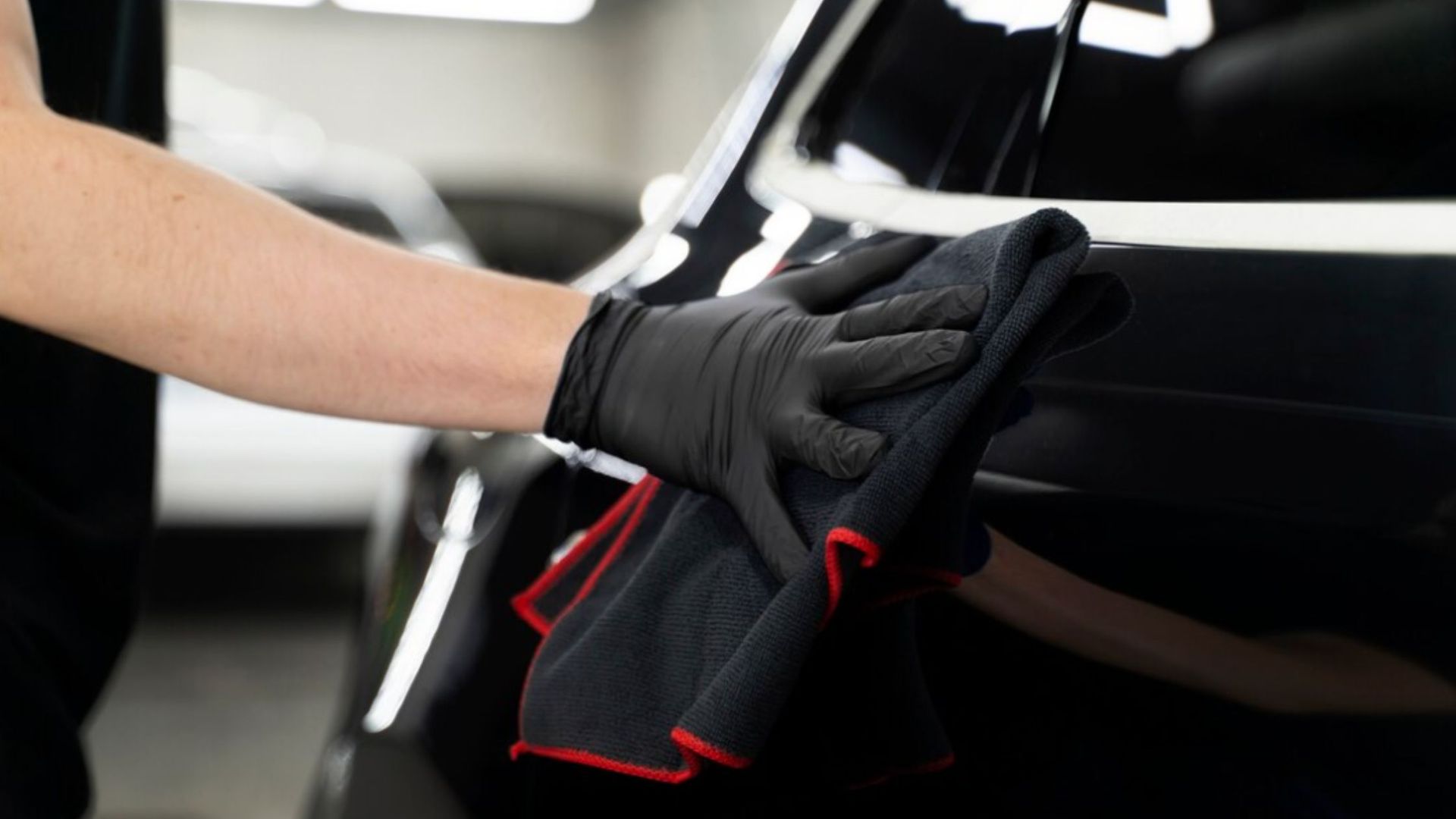
DIP a plush microfiber wash mitt into the soapy solution, then gently wipe one vehicle panel at a time using straight, overlapping lines. After completing each panel, submerge the mitt in the plain rinse bucket and scrub it against the grit guard to release trapped dirt before dipping back into the soapy wash solution.
Step 3: Gentle Drying with Microfiber or Blown Air
Never allow a ceramic-coated car to air dry under direct sunlight, as tap water contains minerals that create stubborn water spots. Dry the surface using ultra-soft, high-GSM microfiber drying towels or a dedicated touchless leaf blower.
Using filtered, forced air removes trapped water from side mirrors, door jambs, body seams, and grill mesh without physically touching the paint, completely eliminating the risk of towel-induced marring.
What Steps Are Included in Professional Ceramic Coating in Baltimore, MD Aftercare?
Ceramic coating in Baltimore, MD requires systematic maintenance to preserve its glass-like finish, hydrophobic water-beading, and UV protection against Atlantic coastal humidity. Professional aftercare goes beyond simple washing to address deep chemical buildup and mineral contamination.
Executing these periodic maintenance steps restores original surface slickness and extends the functional lifespan of the coating.
Chemical Decontamination Every 3 to 6 Months
Over time, microscopic iron particles from brake dust and train rails penetrate the slick outer shell of the ceramic layer. Washing alone cannot release these embedded metal filings.
Applying a specialized pH-neutral iron fallout remover spray turns purple as it chemically dissolves embedded iron deposits. Rinsing this chemical off clears the surface pores without scratching or degrading the protective coating underneath.
Applying SiO2 Ceramic Booster Sprays
Applying a ceramic maintenance booster spray every three to four months reinforces the primary coating with a fresh sacrificial layer. These sprayable liquid formulas contain silica (SiO2) nanoparticles that bond directly to the original coating.
Boosting the finish restores slickness, enhances gloss, and elevates water-beading performance back to day-one standards.
Avoiding Abrasive Mechanical Polishing
Never use traditional rubbing compounds, aggressive clay bars, or abrasive polishes on a ceramic-coated vehicle during routine maintenance. Mechanical abrasives scrape away the hard protective shell, destroying the coating layer completely.
If heavy water spots or deep scratches occur, consult a professional detailer who can perform localized chemical spot treatments or controlled correction techniques.
| Maintenance Action | Recommended Frequency | Primary Purpose | Key Products Needed |
|---|---|---|---|
| Two-Bucket Hand Wash | Every 1 to 2 Weeks | Eliminates routine road film and loose surface debris | pH-neutral shampoo, grit guards, plush microfiber mitt |
| Chemical Decontamination | Every 3 to 6 Months | Dissolves bonded iron fallout and embedded brake dust | Specialized pH-balanced iron remover spray |
| Ceramic Boost Spray | Every 3 to 4 Months | Replenishes hydrophobic slickness and water-beading | SiO2 or SiC spray booster, high-GSM towel |
| Annual Professional Inspection | Once Per Year | Assesses coating integrity and performs deep cleaning | Expert detailing evaluation and assessment |
Which Products and Chemicals Should You Avoid on Ceramic Coatings?
You must avoid harsh alkaline detergents, acidic wash soaps, abrasive waxes, and automated brush car washes when maintaining a coated vehicle. Using improper products degrades the coating matrix and leaves a dull, hazy residue over your paint.
Selecting the correct chemical formulas preserves the microscopic slickness that makes maintenance so easy.
- Automated Brush Car Washes: Heavy nylon brushes in automated washes slap grit against your paint, causing deep swirl marks and physical scratch patterns.
- Dish Detergent and Degreasers: Harsh household soaps contain aggressive surfactants that strip protective barriers and dry out rubber window seals.
- Traditional Carnauba Waxes: Applying heavy waxes over ceramic coatings clogs the nano-pores, flattening gloss and ruining self-cleaning hydrophobic properties.
- Abrasive Polish and Rubbing Compounds: Mechanical abrasives scrape away the ceramic surface layer, requiring a full coating reapplication.
How Does Local Baltimore Weather Impact Your Coating Maintenance Routine?
Maryland experiences diverse seasonal extremes, ranging from freezing winter ice storms to sweltering, humid summer heatwaves. These changing environmental conditions impose specific stresses on automotive paint finishes across urban and suburban neighborhoods alike.
Understanding local climate hazards helps car owners adjust their maintenance steps throughout the calendar year. In historical areas like Mount Vernon or tree-lined streets in Columbia and Clarksville, spring brings heavy oak tree sap, sticky honeydew, and dense yellow pollen. Allowing organic sap to sit on a warm vehicle hood causes chemical etching, so prompt hand washing during spring is essential.
During winter, driving through heavy traffic along Interstate 95 or urban routes near Federal Hill coats lower body panels in salty liquid slush. If left unchecked, mineral salt crystals dehydrate surface coatings and leave harsh chalky residues.
Summer weather along the Patapsco River brings elevated humidity and sudden rain showers. Raindrops carry airborne industrial pollution from surrounding port areas, which dries under hot sunlight into stubborn mineral water spots across the hood and roof.
Regular maintenance keeps your protective barrier intact against all four seasons. If you notice water spots that do not wash off easily, you can contact us to schedule a professional paint surface evaluation with our team.
How Do You Restore Hydrophobic Water Beading When a Coating Gets Clogged?
You can restore hydrophobic water beading by performing a thorough chemical decontamination wash rather than polishing or scrubbing the surface. When a ceramic coating appears to lose its water-repelling abilities, the coating itself is usually not worn away; instead, the surface pores are simply clogged with oil and road grime.
Following a targeted decontamination protocol uncovers the clean ceramic layer beneath.
- Perform a Pre-Wash Treatment: Spray the lower panels and rear bumper with a mild traffic film remover or citrus pre-wash to dissolve oily road film.
- Wash with a Dedicated Decontamination Shampoo: Use a specialized coating reset shampoo designed to strip away surface oils without harming the underlying coating structure.
- Apply a Chemical Iron Fallout Remover: Spray iron remover across all painted panels, allowing it to dissolve embedded metal particles before rinsing thoroughly.
- Inspect Water Behavior During Rinsing: Rinse the vehicle with clean water to observe if slickness and tight water beading return across all body panels.
- Apply an SiO2 Booster Spray: Finish the wash process by misting a ceramic booster onto wet panels and drying with a microfiber towel to lock in renewed hydrophobic slickness.
Frequently Asked Questions
Can you take a ceramic-coated car through an automatic car wash in Baltimore?
No, you should never take a ceramic-coated car through a standard brush automatic car wash. The heavy rotating brushes hold grit from prior vehicles, which creates deep swirl marks and damages the coating surface. If you must use an automated wash, choose a 100% touchless facility that uses high-pressure water jets, though hand washing remains the safest choice.
How often should you apply a ceramic boost spray to your vehicle?
You should apply a ceramic boost spray every three to four months after a standard wash. Applying an SiO2 booster spray replenishes the sacrificial outer layer, enhances hydrophobic water beading, and maintains a high-gloss finish between professional detailing visits.
What should you do if bird droppings or tree sap land on your ceramic coating?
You should remove bird droppings and tree sap as quickly as possible using a damp microfiber towel and a quick detailer spray. Bird droppings contain concentrated uric acid that can chemically etch into clear coat finishes under direct sun heat if left sitting for several days.
Do you ever need to wax a vehicle after applying a ceramic coating?
No, you should never apply traditional carnauba wax or paste sealants over a ceramic coating. Waxes do not bond well to ceramic surfaces and will clog the nano-pores, reducing the coating’s self-cleaning abilities and attracting dirt faster.
How do winter road salts in Maryland affect ceramic coatings?
Winter road salts and liquid chemical brines form a corrosive film over lower vehicle panels that can temporarily mask hydrophobic properties. While high-grade ceramic coatings resist chemical corrosion from salt, allowing brine to sit on paint for weeks increases the risk of mineral staining, making frequent winter rinses necessary.
Preserving Your Vehicle’s Finish in Maryland
Maintaining a ceramic coating requires consistency, correct techniques, and the right pH-neutral products tailored to local weather hazards. By avoiding automated brush washes, performing bi-weekly two-bucket hand washes, and applying periodic SiO2 spray boosters, you protect your vehicle against winter salt, summer humidity, and industrial road film. Proper ongoing care preserves high gloss, ensures effortless washing, and extends the life of your protective investment for years to come.
When you want expert guidance or professional maintenance for your ceramic coating in Baltimore MD, working with local specialists guarantees top-tier care. At
Darker Image Auto Studio, we provide meticulous surface care, premium ceramic maintenance services, and honest advice to keep your vehicle looking immaculate.